Showing posts with label wildlife photography. Show all posts

Monday, August 24, 2015

Christmas in Antarctica!


Just signed up for a month of underwater exploration in Antarctica spanning Christmas and New Years. With its unnamed invertebrates, below freezing temperatures, and carnivorous seals that stretch the length of a mid-size car, our earth's most southern continent is a place of wondrous finds.

Swimming amidst grounded icebergs and penguins while losing sensation in your lips from the 29F/-1.6C water is the kind of diving that challenges the mind, body and whatever other ingredients make us human.

For laughs, I have included a link of some hijinks Patrick Gilmore and I got into when exploring the islands and channels of the Antarctic Peninsula aboard the National Geographic Explorer.

Penguins: High Def vs. Standard Def

As well as the recent article from scientist Skye Moret using my underwater images to compare the color differences between what is above and below the waters off the white continent.

In Living Color: Antarctica's Vibrant Wildlife Under the Sea

Saturday, February 21, 2015

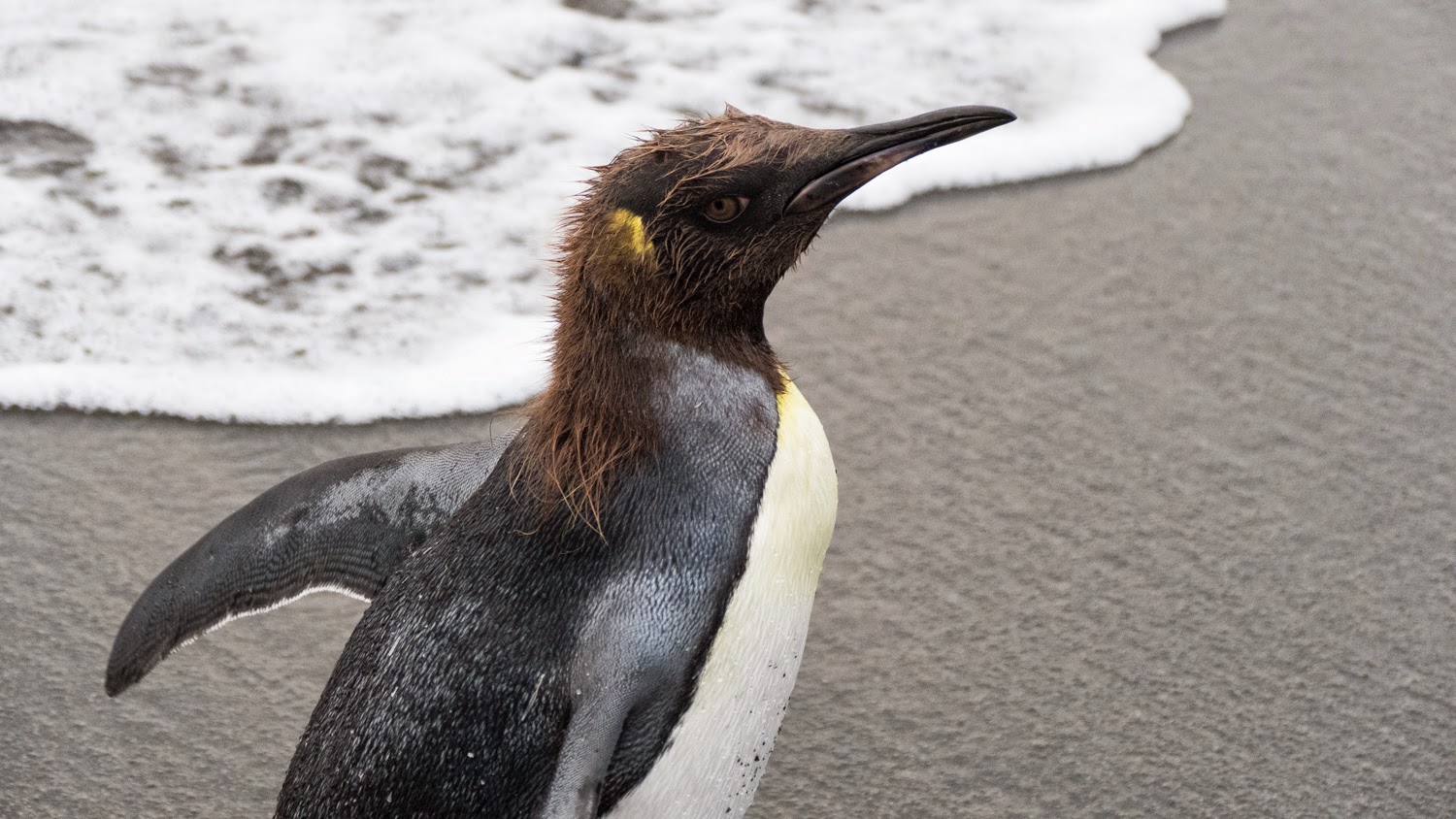
Ugly Chick Competition – King Penguins

Before we get started, let us level the playing field by recognizing that growing up is tough work. This stands as a universal truth for every species on our planet, but few have such a dynamic and aesthetically hysterical transition as the offspring of King Penguins.

Long before their golden sheen develops, they are forced to spend their beginning days on shore taking what food their parents offer until they shed their dense juvenile feathers and are able to swim and feed themselves.


Initially, they appear much larger than they actually are with brown feathers dry and fluffed. At this point, they are known as Oakum Boys – a term adopted from the loose fibers that were dipped in tar and used to caulk the occasional hole in a wooden ships.


Because of their size, it takes King Penguins chicks 14-16 months before they reach adult plumage and are ready to hunt on their own and the transition of feathers is never simultaneous. Leaving all manner of outrageous ‘hair cuts’ to marvel at.


As with all things, not all of the chicks will live to reach adulthood, but those who do will create one of the largest concentrations of life able to be witnessed in one place – South Georgia island.


Until that time though, they are perfectly fine prancing their youthful punk for anyone wishing to see.